
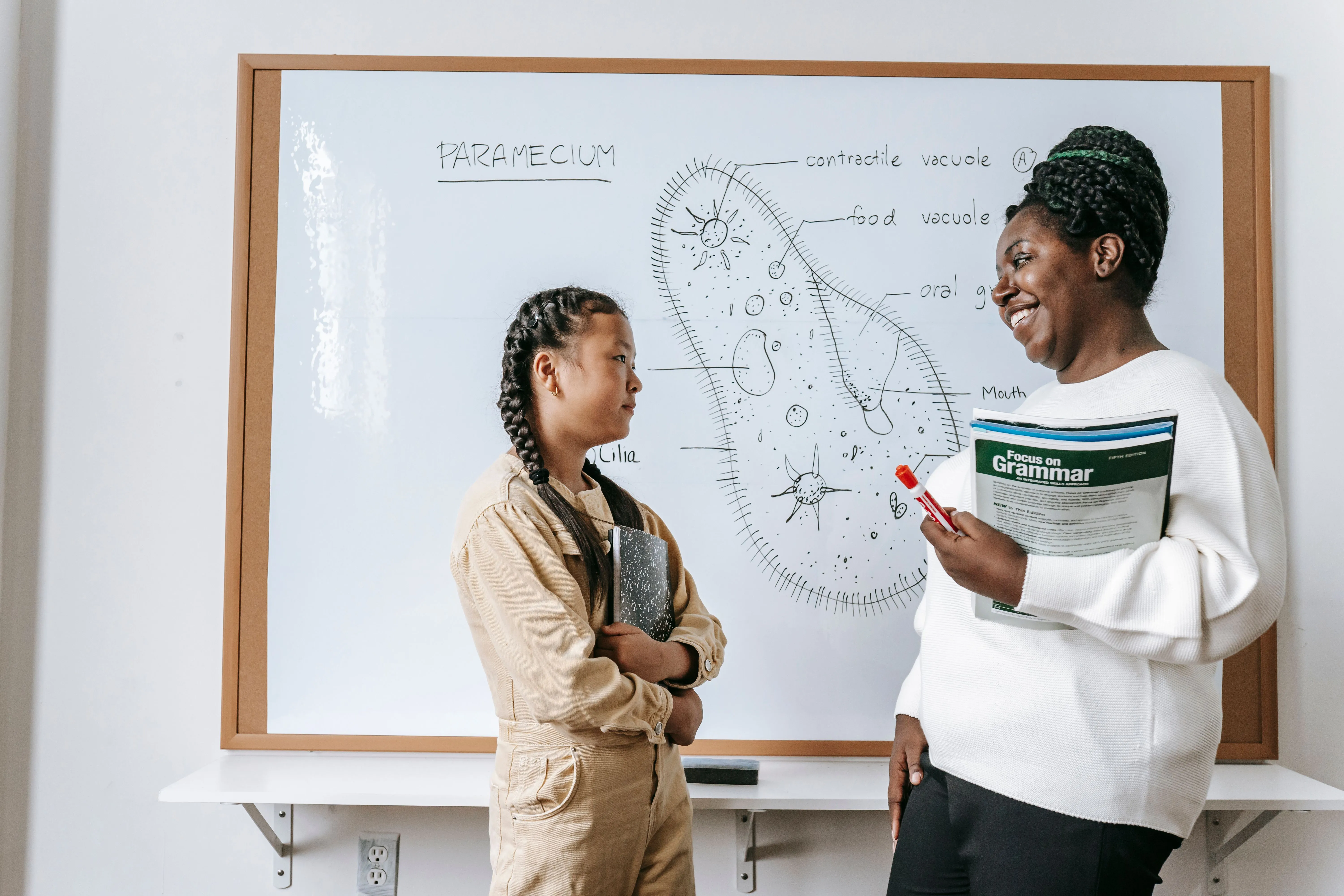
Participating in a science fair can be transformative, a chance to explore your passions, sharpen your critical thinking, and even win prestigious awards like those at the International Science and Engineering Fair (ISEF).
One of the biggest factors in getting there is finding the right mentor. A good one offers guidance, expertise, and support that helps you navigate the complexities of your project and reach your full potential. This guide walks you through finding that mentor in seven steps.
Why a Mentor Matters
A mentor plays a vital role in your science fair journey. The right person brings expert knowledge in your specific field, offers constructive feedback that sharpens your project, and helps you problem-solve through technical challenges. Beyond the science itself, mentors open doors, connecting you with resources and other experts, and their guidance builds the confidence and presentation skills that make a real difference in front of judges.
7 Steps to Find a Science Fair Mentor
1. Identify Your Project Interests
Start by clearly defining your project idea and the scientific field it falls under. Whether it's biology, chemistry, physics, or engineering, knowing your area of interest helps you target the right mentors.
If you haven't landed on a project idea yet, our guide to coming up with a winning science fair idea is a good place to start.
2. Reach Out to Teachers and Professors
Teachers, especially those in science departments, are excellent resources. They can mentor you directly or connect you with colleagues and university professors who specialize in your area. It's worth taking the shot, a single introduction from a teacher to a university contact can open the door to a research project you'd never have accessed on your own.
3. Use Online Platforms
Platforms dedicated to connecting students with experienced mentors can significantly shorten the search. This is exactly where structured mentorship helps most, our guide to science fair mentoring for prestigious competitions explains how working with someone who's competed changes your odds at the top level.
4. Join Science Clubs and Organizations
Joining science clubs, both at school and in your community, opens doors to potential mentors, since these groups often have networks of professionals willing to guide aspiring young scientists.
Competitions can work the same way: the International Research Olympiad (IRO), for instance, is an olympiad-style contest dedicated to testing science research ability, and getting involved connects you with a community of like-minded students and mentors.
5. Attend Science Fairs and Workshops
Science fairs, workshops, and seminars are full of passionate people who are often eager to help students succeed, making them a great place to meet a potential mentor. A good starting point is your own school or local fair.
6. Explore Summer Programs
Summer research programs are one of the best ways to work directly with incredible mentors, often university faculty and PhD researchers, on real projects over an extended period. The relationships you build there can carry well beyond a single summer. O
ur guide to 50 STEM summer programs for students rounds up strong options across a range of fields and interests.
7. Use Social Media and Online Communities
Platforms like LinkedIn make it easier than ever to connect with professionals in your field. Don't hesitate to reach out, express genuine enthusiasm for your project, and explain the guidance you're looking for. A clear, sincere message goes a long way, and the worst outcome is simply no reply.
Work With ScienceFair's Mentors
The steps above can help you find a mentor on your own, but the fastest path to a competition-ready project is working with mentors who have already done it. That's exactly what ScienceFair offers, and it's a combination that's hard to find anywhere else.
Every coach on our team is a past science fair winner, ISEF Grand Awardee, Regeneron STS Finalist, and/or an MIT Research Science Institute alumnus, so they know precisely what judges look for, how Q&A sessions unfold, and what separates a strong project from a winning one.
Alongside them, our Ivy League research mentors help you build a rigorous, publishable research question and see it through, giving you both the scientific depth and the competition strategy that top projects need. It's the difference between guessing at what works and learning it from people who've stood on that stage.
Ready to work with a science fair winner and an expert research mentor? Schedule a call with our academic advisor.
