
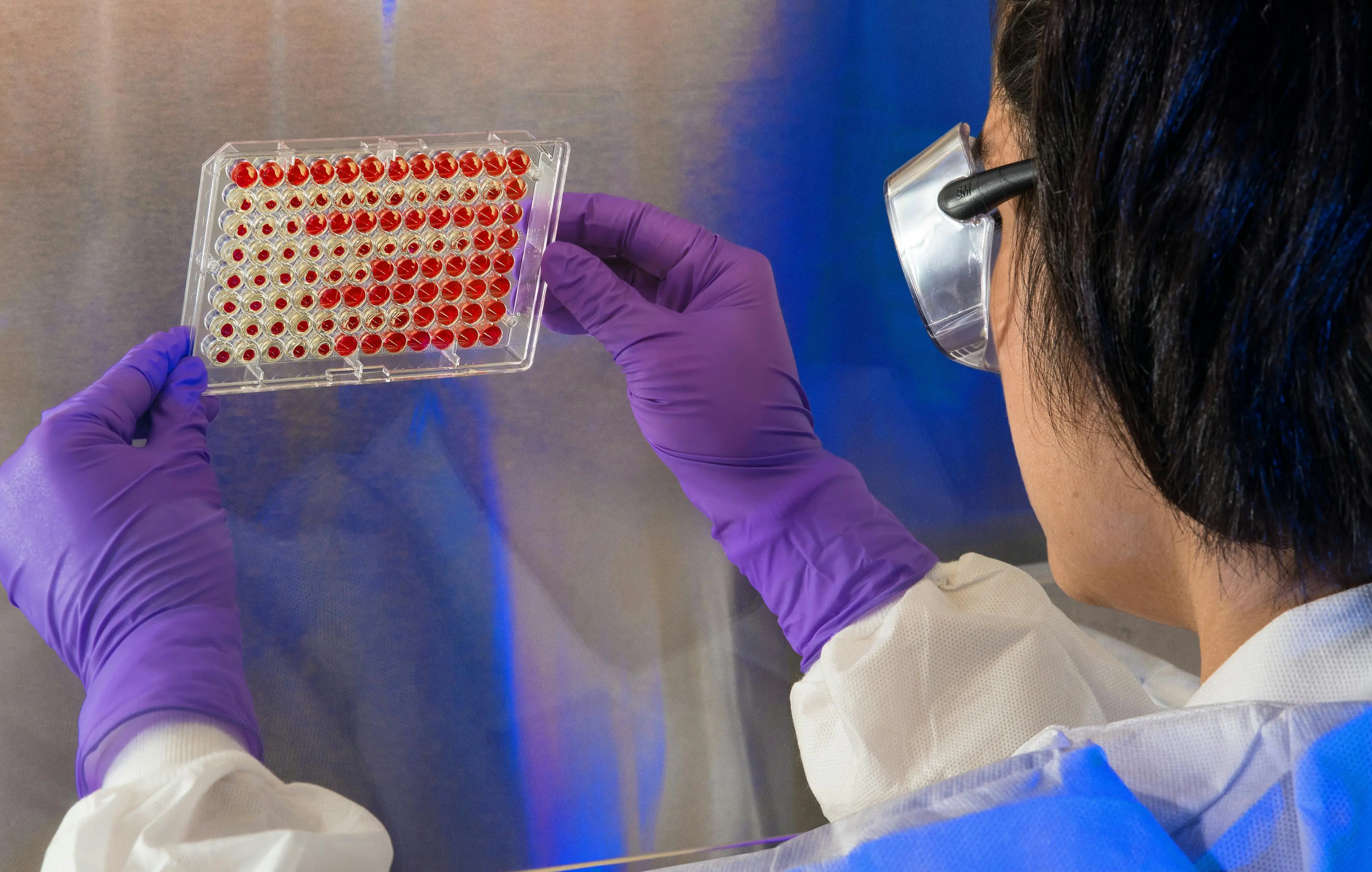
When I first started in the wet lab, running plasmid preps and shipping out samples to be sequenced, one of the biggest hurdles I faced (besides not really knowing what I was doing) was planning out my experiment days.
I would come in, ready to run the plasmid prep, but having completely forgotten to actually inoculate any bacteria to be used in the plasmid prep, and thus my entire timeline would be ruined because I’d have to wait a whole extra day for bacteria to grow in liquid culture.
I promise this slowly gets easier over time, because the more familiar you are with the exact techniques you are using, you get a better sense of how much time they take. Since then, I've won an award at ISEF and now I'm an undergraduate student at Brandeis University.
5 Best Ways Organize Your Scientific Research
Based on my experience doing research in a lab during high school, here is best advice on planning your experiments and maximizing your research time.
Manage Your Commitments
Before you really get into the thick of a high-level research project, it’s important to conduct a self-assessment of your other commitments, like school, sports, or other clubs.
Science research is extremely time-consuming and mentally draining, and it may be an activity that should replace something else, instead of being an addition to your schedule. So, when you are picking out your schedule for the school year, factor that in.
It sounds great to take every AP class that has ever been offered in your school, but for the amount of time and effort it takes to get good grades in those classes while also juggling intense extracurriculars like research, you might consider dropping down to an honors level class.
I know this seems like the most obvious piece of advice ever given, but it is one that I have ignored, and that ignorance led to an obscene amount of mental breakdowns and panic attacks and exhaustion as I was trying to maintain everything that I had signed up to do. Save yourself the heartache and be smart with your schedule planning.
Stay Organized With a Digital Calendar
It’s very possible that I was behind to the whole digital calendar trend. I personally used a paper planner for a really long time, and I still do use one specifically for tracking homework and school assignments. But alas, when things in the lab really started picking up, a digital calendar was my savior.
It allows so much flexibility, because if a lab day doesn’t go exactly as planned, you can easily just move that time block to a different day and adjust your schedule from there. I really appreciate the ability to see the whole week as a whole, because especially for the life sciences, a procedure can take multiple days until it is completed.
A digital calendar is also super easy to use on both a laptop and on a phone, which gives you even more flexibility; my mom often asks when I’ll be in the lab that week, and I can whip out my phone and tell her.
Finally, you get to use a lot of really pretty colors, and honestly, that’s just always a win. So if you are serious about integrating your research into your daily life, using a digital calendar is the easiest way to start.
Use a Lab Notebook
Your lab notebook is one of the best places to really flesh out the possibilities for an experimental timeline. The entries don’t need to be excessively neat, and that leaves a lot of creative space to write out some ideas that you have to solve the latest issue that has sprung up in your project. Let the juices flow!
An unrestricted space like your lab logbook will give you the chance to see every unique angle that a problem may present to you, and you can also do some rough sketching of a potential timeline or schedule before you finalize it in your calendar. When things don’t go according to your original plan (I promise they won’t!), you can easily flip back to the entries you’ve made, see the potential solutions you’ve explored in the past, and then get going from there.
Watch Experts on YouTube
I would say that the thing that most introduced me to how long a research procedure can take was watching other scientists on YouTube carry out the same procedure.
If you don’t yet have access to instructions or don’t understand the technique, watching a professional do it gives you a really good idea of what exactly your biggest learning curve will be. Once you’ve identified that, it’s much easier to plan how long each of your initial experiments will be, because you can anticipate the extra time you’ll need to learn a skill (and, inevitably, to mess it up and start again).
You should also try to discuss with a mentor, grad student in the lab, or some other experienced person to get an idea of just how taxing a particular procedure can be; that way you can devote a little more brain power and time to each task.
Use Your Downtime Wisely
Often, I discovered when running a new method that there would be a lot of extra time while I was waiting for something to finish in the thermocycler or centrifuge or other apparatus. This is where the true time managers will be separated from the posers. If you want to actually maximize your time, take advantage of the downtime you have when something is processing or reacting, and do something else. Don’t just sit down and doomscroll.
My favorite things to do were to knock out some of my easier homework assignments, reply to emails, or read some papers that had to do with my work for the day. It doesn’t need to be a big project that you start while the autoclave sterilizes your media, but you’ll be surprised how much more productive you are when you take care of some smaller agenda items when you get a spare moment.
Managing Your Scientific Research
Planning out your experiments and organizing your research is extremely possible, and as a bonus, you'll become seriously good at time management.
I painstakingly learned this advice I've just shared over years of conducting wet-lab research, and I am positive that it will help you achieve your goals in the same way that it helped me.
And just one final note: don’t forget to take advantage of the pretty colors in Google Calendar; they make your day just a little bit brighter.
Unlock Your Potential with ScienceFair
To help you make an impact with your science research, ScienceFair offers comprehensive coaching by ISEF finalists and winners, tailored for high and middle school students.
Our mentors help you at every stage of your project, from brainstorming innovative ideas to conducting in-depth research to presenting your final work with confidence.
Schedule a consultation call to connect with a member of our team and create a personalized plan tailored to your needs.
