
Do you want to know the THE STATS of a person that got into Harvard?
I am Rishab Jain who was accepted into Harvard, Stanford, and MIT!
Today I am gonna be REVEALING ALL OF MY SECRETS! + advice along the way for what you should do.
I will be talking about the courses and classes that I took through my high school years along with my GPA.
I will also be talking about my test scores and awards plus tips and advice!
Be sure to hang around till the end or you will miss out on valuable advice for you.
Prefer watching a video instead of a blog? https://www.youtube.com/watch?v=FP4hj1PouF4 DISCLAIMER: Rishab is revealing ALL OF HIS SECRETS!
But before we dive into the blog…you need to understand that everyone is different.
DO NOT compare yourself with me and my achievement because certainly I never did.
Just follow your passion with hard work and you will be accepted into your dream college!
High School Courses: AP’s, Honors, Foreign Language & Arts Freshman Year
- 9th Grade Lit Comp 9 Global Studies 9 Precalculus STEM Chem Spanish II AP Psych Sophomore Year
- 10th Grade AP Lang APUSH
- AP U.S. History AP Calc AB AP Bio Concert Choir
- Yes!
I’m not just a STEM nerd 😁 Spanish III AP Environmental How did you make that decisions to jump from 1 AP Class to 5 AP Classes!?
I gauged that based of off the rigor I was getting through honors classes, and I would definitely recommend for you guys to do so as well.
If you are currently struggling in an honors class as well as not able to handle the amount of stress, I would never recommend for you to jump to an AP Class.
Pick classes according to your ability, not your will.
Junior Year
- 11th Grade AP Literature AP Econ
- Macro + Micro AP Calc BC AP Physics C
- Mechanics + E&M Spanish IV AP Comp Science Principles Cultural Anthropology/PE Senior Year
- 12th Grade American Lit/Writing 122 AP Chem AP Gov AP Stats Global Conflict 💡Bonus Tip: If you are planning at take AP Lang and AP Lit, I would suggest you get the maximum score for AP Lang such as a 5 because in most cases you would not be required to take the AP Lit test if you get a 5. I also made a tier ranking list that outlines all the AP Tests and classes which will really help you in choosing your classes!
Test Scores As for the test scores, I took the ACT and I got a 36 composite score with an 11 on the additional essay section.
Personally, I would recommend any STEM student who is decently good at math to take the ACT rather than the SAT because you have a better chance of getting a higher score on the ACT than the SAT because of the grading scale.
Here’s the in-depth guide on why you should take the ACT over the SAT: https://www.youtube.com/watch?v=vgFnlH-US_M&t=0s The ACT is much EASIER than the SAT!
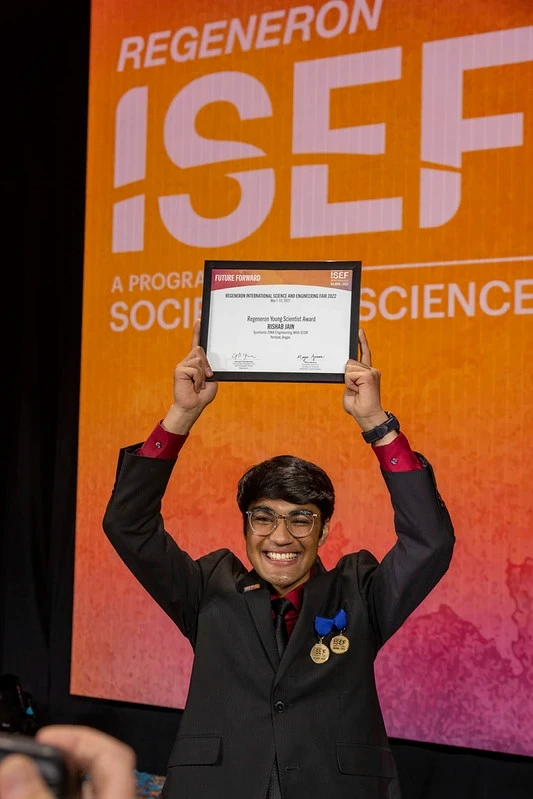
Find out WHY Awards Regeneron Young Scientist Award ($50,000) & Grand Awards at International Science & Engineering Fair The ISEF is the largest pre-collegiate science fair for high school students who compete with their science research projects You MUST use the single most useful guide on how to do research to compete at competitions like these for STEM Students.
My playlist on How to do Research provides some of the most useful tips to doing science research, internships and etc… TIME Magazine’s 25 Most Influential Teens
- International Research Science Institute Scholar Want to get into RSI?
Use the valuable tips in my RSI Video to secure a spot!
Eagle Scout Rank in Boy Scouts of America TWO Time 1st Place Winner ($12,000) of National Junior Science & Humanities Symposium(JSHS) (out of 8000) The #1 Question I always get after students look at my awards is that how did you decide that science research was gonna be your #1 extracurricular in high school?
I’d highly recommend you watch the Part 2 of the video titled: The Extracurricular that Got Me into Harvard, Stanford, MIT….
