
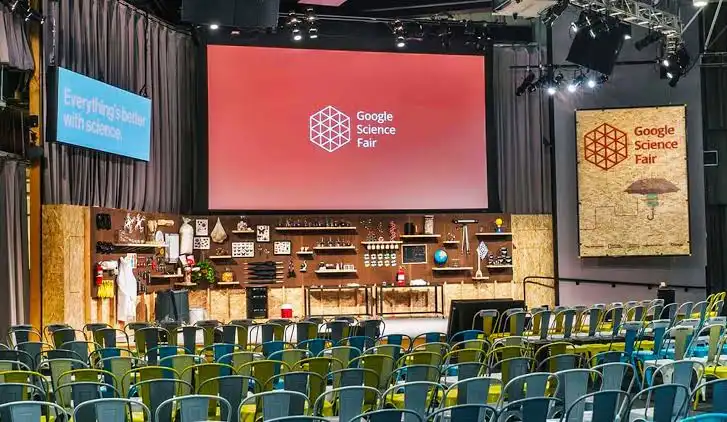
If you've ever dreamed of showcasing your scientific passion on a grand stage, that's a fantastic goal, but if the Google Science Fair is what you had in mind, there's something you should know first. Here's what the competition was, why it's no longer running, and the strong alternatives worth pursuing instead.
What Was the Google Science Fair?
The Google Science Fair was an online science and engineering competition open to students aged 13 to 18 worldwide, encouraging them to change the world through scientific inquiry and problem-solving. Sponsored by Google, LEGO, Virgin Galactic, National Geographic, and Scientific American, it ran annually from 2011 through 2018 with the aim of finding the next generation of scientists and engineers.
Past winners tackled remarkable problems: the early diagnosis of breast cancer, improving the music-listening experience for people with hearing loss, and cataloguing aquatic ecosystems. Prizes included a $50,000 Google scholarship, a National Geographic expedition to the Galápagos, and experiences at CERN, Google, or the LEGO Group, alongside a separate $50,000 Science in Action prize from Scientific American for a project addressing a social, environmental, or health issue.
Unfortunately, the Google Science Fair was last run in 2018, and there are no announced plans to bring it back.
What to Do Instead
If you're set on competing, plenty of excellent alternatives exist. ISEF stands out for its significant prizes and prestige, and our roundup of the top science competitions for high school students maps out many more, from national contests to international ones. It's also smart to enter local and state science fairs, which can be easier to win and often serve as the qualifying path toward ISEF.
Whichever you choose, the fundamentals of a winning project are the same, and it helps to start with a strong idea, which our guide to coming up with a science fair project idea walks through.
Finding a Mentor
One of the best ways to strengthen a research project is to find a mentor willing to support your goals. Cold-emailing researchers is the most reliable route, and you don't need an Ivy League connection to make it work. In fact, professors at the most prestigious universities are often focused on their own undergraduates, so casting a wider net can serve you better. The most important advice here is to start early, since good research takes time. For more on how to make the most of expert guidance, our guide on how to get advice from a science fair winner is worth a read.
Laying the Foundation
Start with a topic that sparks your curiosity, then narrow it to a specific research question you can explore in depth. You want your work to be comprehensive but readable, so pick a focused niche rather than trying to cover everything.
Gather evidence from credible sources like academic journals, scholarly books, and reputable websites, preprint servers and open-access journals are especially useful since they're free. Document every source as you go, since it makes citing everything far easier later; tools like BibTeX are great for organizing and generating citations.
Conducting Your Literature Review
The literature review is the foundation of your project. It's where you become an expert on your topic by exploring what others have already discovered, which is exactly how you spot the gaps that make a research idea specific enough to build on. To tackle it well:
Start by brainstorming keywords, the key terms related to your topic that will lead you to relevant sources. Use your school library and online databases to find academic journals, articles, and books, prioritizing credible sources from universities, research institutions, and reputable organizations.
As you read, skim strategically: focus on what's relevant to your idea and gloss over the rest to save time, while paying close attention to the arguments researchers are making and the connections between their work. Finally, stay organized, whether with note-taking apps, index cards, or a simple notebook, keeping your notes tidy makes writing far easier down the line.
Preparing Your Presentation
At a science fair, you might assume judges care only about your research. But sophisticated work is only half the battle, how you present it significantly affects your score. Your goal is to convince judges not just that your research is rigorous, but that there's a real reason to care about it.
Make it memorable. Our brains are wired to forget stand-alone facts, and a complex project has a lot of them. Weave those facts into an engaging story or a clear context, and they become far easier for judges to remember.
Show your passion. Presenting with genuine enthusiasm signals real investment in your work. Judges love to see students who care, and demonstrating that earns you a favorable impression before you've even finished.
Communicate clearly. Storytelling has been used to convey important ideas since the beginning of humanity for a reason. If a judge can follow a clear "storyline" through your presentation, you're far more likely to make an impact.
Once your findings are ready and you know how to convey them, the last step is building your board. For that, our guide to building a standout science fair poster walks through how to design one that supports your story rather than burying it.
Making Your Run at a Science Fair
Winning a science fair takes focus, organization, and a commitment to clear communication. Follow the steps above, and you'll build a well-structured, compelling project, and the research, analysis, and communication skills you develop along the way are valuable far beyond any single competition.
If you'd like expert guidance turning a strong idea into a winning project, that's where ScienceFair comes in. Our mentors have competed in and won the top STEM competitions, and they'll help you sharpen your research, prepare for the judges' Q&A, and present your work at its best.
Ready to take the next step? Schedule a call with our academic advisor.
