
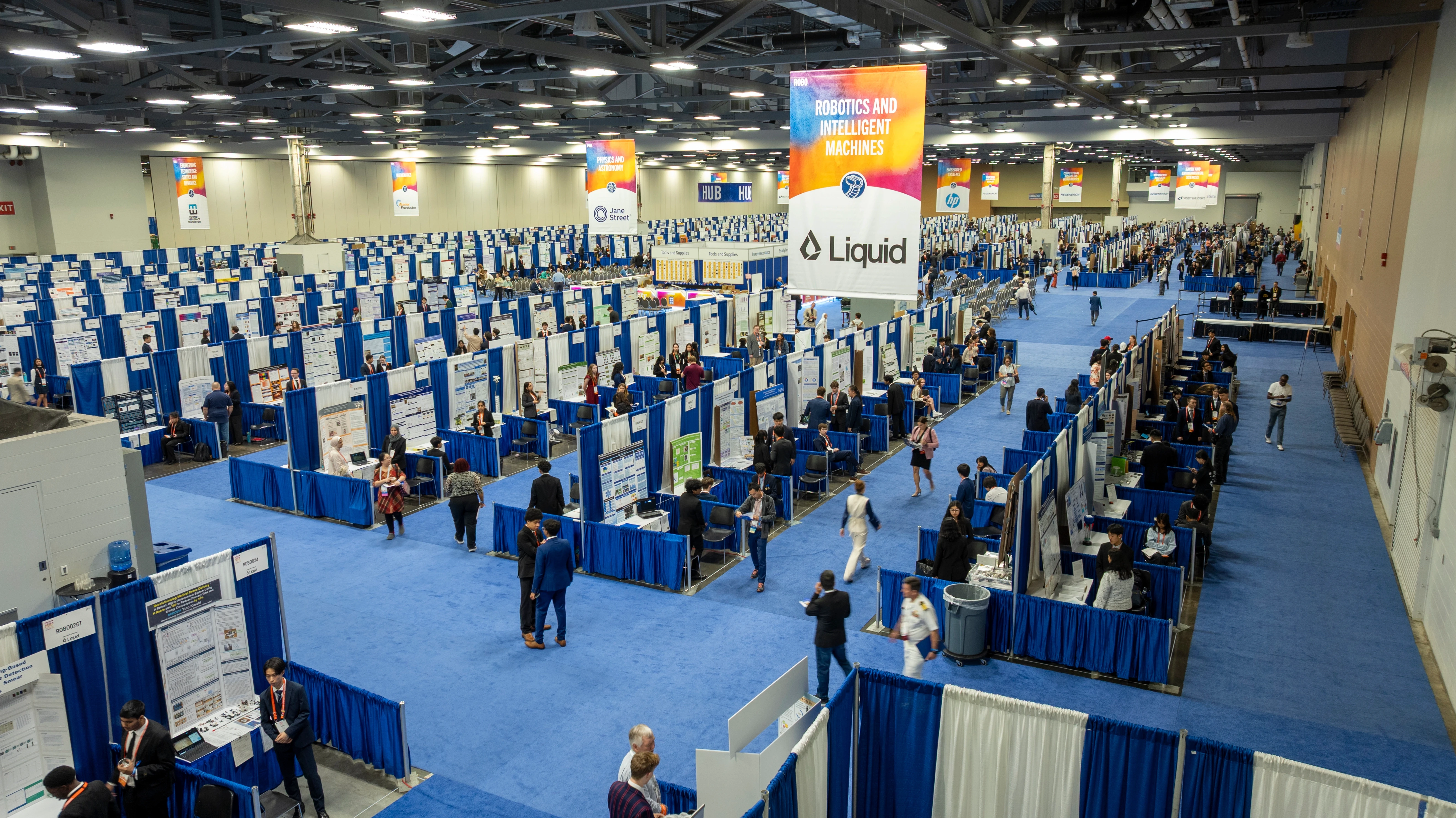
By the time you reach the final month before the Regeneron International Science and Engineering Fair (ISEF), most of the hard work is already done.
At this point, the students who improve the most are the ones who refine their projects and strengthen their presentations.
This is where many students make the wrong move.
They spend the last few weeks before ISEF trying to add another experiment, rewrite half their project, or chase a more impressive-sounding result. In reality, those last-minute changes usually make the project less polished, not more.
Two Mistakes Students Make Preparing for ISEF
Making Major Changes
The biggest mistake students make before ISEF is assuming that a stronger project means adding more information.
If you are one month away from competition, major changes are risky, so be mindful of changes:
A different experiment often creates more unanswered questions
New data from different experiments can force you to rewrite your conclusions
A complicated addition can make your project harder to explain
Last-minute changes often leave you less confident during judging
However, this does not mean you should avoid improving your project.
By this stage, your focus should be on identifying and addressing the weak points identified at regional or state fairs, especially when compared with other projects. Sometimes this is due to insufficient data or not going deep enough into a specific question that judges were interested in. However, for most people, their science is done.
What you may want to focus on is collecting more data on the same experiment to perform a stronger statistical analysis, or further investigating a specific question to help round out your project. For others, it could be to look back into your code to make a detection mechanism more specific.
The goal is not to shift your project to a new idea, but to build on and extend what you have already done.
Ultimately, judges care much more about whether you understand your project deeply than whether you added something new at the last minute. A project that is polished, focused, and clearly explained will usually outperform a broader but unfinished project.
Your goal now is refinement. You should tighten your explanations, practice answering judges’ questions, and ensure your poster is easy to read and understand. Those things will make the biggest difference at ISEF.
Making a Poster into a Research Paper
Many students design their poster like a research paper pasted onto a board. Judges do not stand in front of your poster and read every word. Instead, they skim it from a distance. You can also use it as a prop as you speak to the judges.
Your poster has one job: make your project easy to understand.
The strongest posters do three things well:
They make the main question immediately obvious
They show the most important result clearly
They guide the judge through the project without making them search for information
They demonstrate complicated concepts or methodological choices visually
If a judge has to hunt through dense paragraphs to figure out what you did, you are already making the conversation harder.
Before ISEF, take a step back and look at your poster the way a judge will. Is your most important graph immediately obvious? Are there sections with too much text, or figures that are filling space without adding anything important? If the answer to any of those questions is yes, simplify.
A strong poster makes the key idea, result, and significance of the project obvious almost immediately.
Prepare for the Questions Judges Will Actually Ask
Most students practice by repeating a memorized presentation. But you also need to prepare for the Q&A after the presentation.
Judges often care about how you communicate your project, clearly and confidently, and how you respond when they push deeper.
These are the kinds of questions you should expect:
Why did you want to focus on ____?
How did you come up with this idea?
Why did you choose this method?
What was the biggest limitation of your project?
How is your work different from previous research?
If you had another six months, what would you do next?
If you could go back and start again, what would you do differently?
Why should anyone care about these results?
You do not need perfect answers. But they need to be honest and thoughtful.
The best responses are direct and have been thought through. You should acknowledge limitations honestly, but don’t fixate on them. You must explain the reasoning behind your decisions, show that you understand how your project fits into the bigger picture, and make it clear that you have already thought about what you would do next.
A student who can discuss weaknesses intelligently often appears stronger than a student who tries to pretend their project has none.
What Judges Are Actually Looking For
Students often assume that judges are only looking for the most advanced topic or the most complicated science. But at ISEF, judges are looking for students who combine strong research with a strong understanding of the science.
They want to see:
Clear ownership of the project
Genuine understanding of the methods and results
Confidence without sounding rehearsed
The ability to explain complex ideas simply
Evidence that you made thoughtful decisions
These abilities matters because judges only have a short amount of time with each student.
If you can explain your project clearly and confidently, judges are much more likely to believe that you truly did the work and understand it.
How to Practice for ISEF in the Right Way
Rather than memorizing a script, practice in a way that feels closer to the real judging experience:
Give your explanation to someone unfamiliar with your topic
Have them interrupt you with questions
Practice explaining the same idea in multiple ways
Time yourself so you can give both a short and a long version
Record yourself and notice where you sound uncertain or overly complicated
You should be able to explain your project in about 3 minutes and give yourself time for detailed questions from the judges. The best way that judges can ask more specific questions is if they understand your speech, and your speech’s role should be to make your project the most accessible to all judges.
What to Do in the Final Month Before ISEF
By the final month before ISEF, your project should already be good enough. So spend this time refining your work, addressing any remaining weak points, and becoming the strongest possible advocate for your own project.
That means:
A cleaner poster
Strong, complete data
Sharper answers
Better practice
More confidence
At ISEF, the students who stand out are the ones who walk into judging knowing exactly what their project is, why it matters, and how to explain it.
Prepare for Science Fair Judging with ScienceFair
At ScienceFair, past ISEF winners coach students going through this process to prepare for ISEF.
If you want targeted feedback on your project, help with judging strategy, mock judging, and to improve your communication skills, schedule a consultation call to connect with one of our team members and create a personalized plan tailored to your needs.
