
Starting on STEM projects in middle school is one of the best ways to set yourself up to excel at the science fair in high school. Below are hands-on project ideas spanning biology, environmental science, and sustainable engineering, each with the materials you'll need and the real-world impact behind it. If you want to understand how these projects fit into the bigger picture first, our guide to navigating the science fair process is a helpful companion read.
Nine Science Fair Project Ideas for 8th Graders
Breath of Life: Exploring Lung Capacity
Blend biology and math by testing lung capacity with a balloon. Students predict, observe, and record their findings, trying different ways to measure how much air their lungs can hold, then blow up balloons and measure them to learn about breathing and why it matters for the body. Understanding how lungs work is genuinely important for staying healthy, and this project makes that lesson fun, hands-on, and easy to grasp.
You'll need: balloons, measuring tape, and a group of friends or family willing to participate.
Plant Light Maze: Exploring Phototropism
Build a maze and watch plants change direction as they grow toward a light source. This simple, captivating experiment reveals phototropism, how plants respond to light and adapt their growth to reach it, giving students real insight into how plants find their way and thrive in different conditions.
You'll need: small potted plants, cardboard, scissors, tape or glue, a lamp or light source, a ruler or measuring tape, and a notebook for observations.
Nitrogen and Plants: Growing Insights
Explore nitrogen's essential role in plant growth by comparing pea plants grown with and without nitrogen-fixing bacteria. By observing and analyzing the differences, you uncover the relationship between nitrogen and plant vitality, gaining insight into agricultural practices and ecosystem health. Understanding how nitrogen influences growth is key to cultivating thriving crops while supporting environmental sustainability.
You'll need: pea seeds, soil, nitrogen-fixing bacteria (such as Rhizobium species), and pots or planting containers.
Clear Waters: Exploring Water Quality
Take a deep dive into water quality by testing samples from local streams, swimming pools, or household taps. Use a water-testing kit to analyze parameters like pH, dissolved oxygen, and pollutants, gaining hands-on insight into the water sources in your community and what they mean for human health and the environment. Beyond the learning, the project raises real awareness about water safety and the threats pollution poses.
You'll need: a water-testing kit with the necessary reagents, water samples from various sources, and documentation materials like a notebook and camera.
Wild Tracks: Exploring Animal Prints
Use plaster of Paris to capture the intricate details of animal footprints, then identify species by their track patterns. This hands-on activity immerses you in wildlife tracking and deepens your understanding of local ecosystems, building both ecological awareness and sharp observational skills along the way.
You'll need: plaster of Paris, animal track molds or templates, and field guidebooks on local wildlife.
Sky-High Gardens: Building Vertical Veggie Towers
Transform tight urban spaces into green havens with vertical garden towers built from recycled materials. Growing vegetables where traditional gardening space is scarce is a lesson in both sustainability and ingenuity, and the project tackles real problems: it reduces the carbon footprint of food production while helping address food insecurity in densely populated areas.
You'll need: recycled PVC pipes or wooden pallets for the towers, soil, seeds or seedlings, and basic gardening tools.
EcoQuest: A Recycling Game
Combine environmental education with game development by building an interactive game or app that teaches players, especially younger children, about recycling and waste management. Craft engaging challenges and quizzes that promote sustainable habits, gamifying the concepts in a way that empowers players to make eco-friendly choices and cut down on waste.
You'll need: game development software (Scratch, Unity, or App Inventor), a computer or tablet, and educational resources on recycling and game design.
Earth-Friendly Plastics: Crafting Sustainable Alternatives
Dive into sustainability by developing biodegradable alternatives to single-use plastics. Using natural materials like cornstarch or cellulose, create eco-friendly substitutes for items like shopping bags or food packaging. Through experimentation, you work toward reducing plastic pollution and inspiring others, individuals and businesses alike, to embrace greener practices.
You'll need: biodegradable materials such as cornstarch, PLA, or PHA, molds for shaping them, and educational materials on plastic pollution and biodegradable properties.
Revolutionizing Plastic Recycling: 3D Printing With Recycled Plastic
Turn plastic waste into filament for 3D printing. Collect plastic waste, shred it into manageable pieces, and extrude it into filament you can use to craft entirely new products, a hands-on demonstration of the circular economy in action. Beyond conserving resources, the project keeps plastic out of landfills and oceans while sparking real innovation in sustainable manufacturing and design.
You'll need: collected plastic waste (PET bottles, HDPE containers), a plastic shredder or grinder, a filament extruder, a 3D printer, and research materials on recycling and filament production.
What To Do With These Ideas
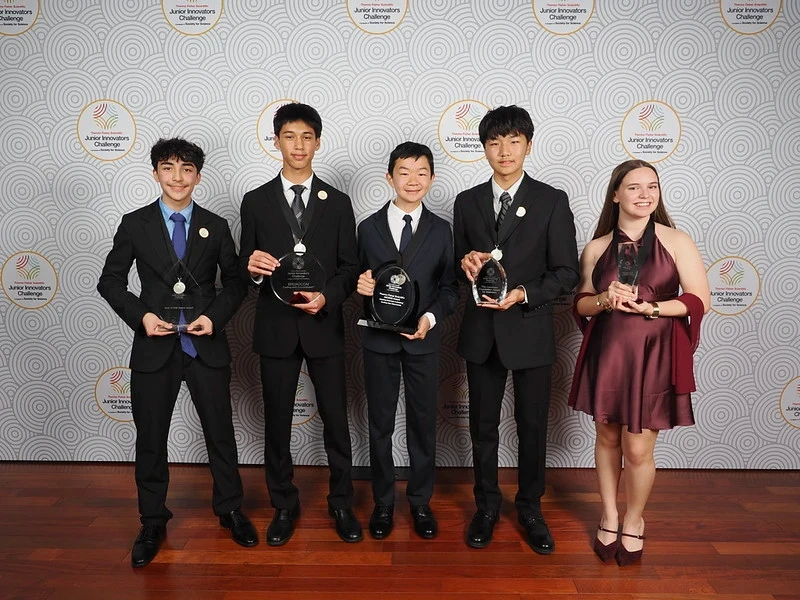
These projects are strong starting points, and the right next step depends on where you're headed. In the 8th grade, you can take part in the Thermofisher Junior Innovator Challenge or the 3M Young Scientist Challenge, and local competitions.
As you move up through high school, our winning science fair projects and best ideas for 11th grade shows how projects grow more advanced, and it's worth reading how to get advice from a science fair winner to make the most of any project you take on.
Start Your Science Fair Journey
Not sure how to turn one of these ideas into a real, competition-ready project? That's where ScienceFair comes in. Our mentors have competed in and won the top STEM competitions, and they'll help you shape your idea, strengthen your research, and prepare for the judges' questions.
Ready to get started? Schedule a call with our academic advisor.
