
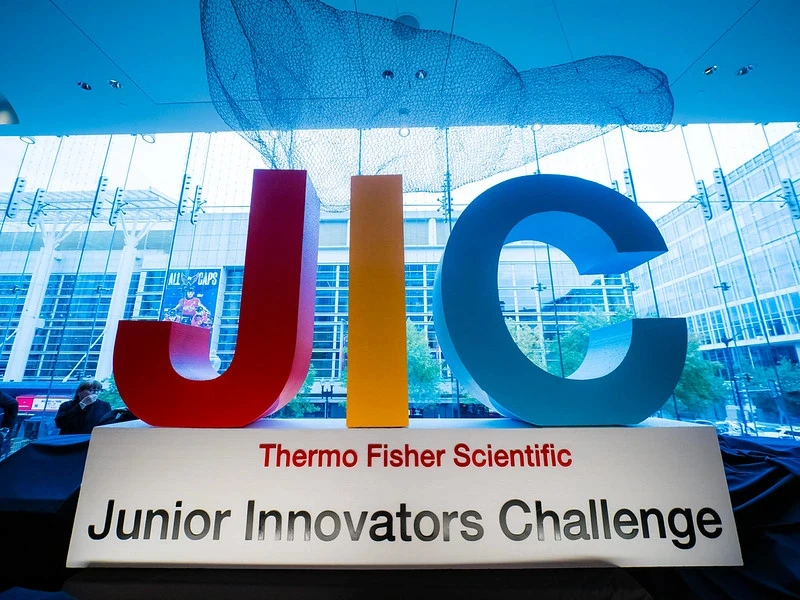
The Thermofisher Junior Innovators Challenge (JIC) is a prestigious platform where the nation’s brightest young minds in science, technology, engineering, and mathematics (STEM) converge to present innovative solutions to some of the world’s most pressing challenges.
Formerly known as the Broadcom MASTERS, this competition offers an incredible opportunity for students to showcase their talents, gain national recognition, and compete for significant awards.
This guide will offer you unique, actionable tips that go beyond the usual advice to help you stand out and increase your chances of winning.
Understanding the Thermo Fisher Junior Innovators Challenge
The Thermo Fisher JIC is a competition for middle school students (grades 6-8) in the United States and Puerto Rico who have completed an independent STEM project.
To compete in JIC, you need to compete at an affiliated science fair. The top 10% of students at each fair go on to compete nationally. Once you are nominated for the Junior Innovators Challenge, you need to fill out an in-depth form to be able to participate in JIC.
The top 30 students go on an all-expenses-paid trip to Washington, D.C. to present their project and have the chance to win up to $25,000.
5 Tips to Win the Thermo Fisher JIC
To win, you need to think strategically and creatively.
Here are some unique tips that have proven successful for past winners.
1. Solve a Problem That Matters to You Personally
Research projects that stem from a student’s own experiences, community challenges, or personal interests often stand out because they tend to be more passionate, thorough, and innovative.
So, start by identifying issues in your community or areas of personal interest. What frustrates you? What would you like to see changed? Then use these questions as a springboard for your project.
Learn about our founder, Rishab Jain’s, journey and research.
2. Focus on Interdisciplinary Approaches
Winning projects often cross the boundaries of traditional STEM fields, incorporating aspects of multiple disciplines.
By blending different areas of science, technology, engineering, and mathematics, you can create a project that is innovative and multidimensional.
What you can do is think about how you can combine fields. Could you use data science to analyze biological data? Or engineering principles to create a solution for a chemical problem?
This kind of cross-disciplinary thinking is highly valued and can provide you with a more varied project.
3. Make Your Data Work for You
As well as collecting data, you need to interpret and present it.
Many students fall into the trap of presenting raw data without drawing meaningful conclusions.
Judges appreciate projects where the data is analyzed thoughtfully and used to back up claims or propose new ideas.
To do that well, learn how to use statistical tools to analyze your data. Software like Excel, R, or Python can help you perform regression analysis, create scatter plots, and find correlations. Then, use this analysis to tell a compelling story with your data.
The depth of analysis, combined with clear data visualization, made the project stand out.
4. Master the Art of Communication
The Thermo Fisher JIC competition requires students to communicate their ideas effectively.
This includes both your written report and your verbal presentation.
Clear, concise, and engaging communication is key to capturing the judges’ attention.
Practice pitching your project to someone who isn’t familiar with it. You can practice with friends or family members, even if they don’t understand the science behind it.
Can they understand the significance and impact of your work? Use analogies, visuals, and a clear narrative to make your project accessible and memorable.
5. Leverage Mentorship and Resources
Many successful participants in the Thermo Fisher JIC have had mentors who guided them through the research and development process.
A mentor can offer valuable feedback, help you troubleshoot challenges, and push you to think more critically about your work.
Coaches can provide guidance on everything from project selection to final presentation, giving you a significant edge in the competition.
Get Elite Mentoring for the JIC
As we mentioned, having a mentor gives you support for your research and improves your communication skills.
At ScienceFair, all of our coaches have competed in the top competitions in the company: Junior Innovators Challenge, Science Talent Search, and the International Science and Engineering Fair.
They have a unique perspective that will help you to succeed. Book a call with our academic advisor to learn more.
