
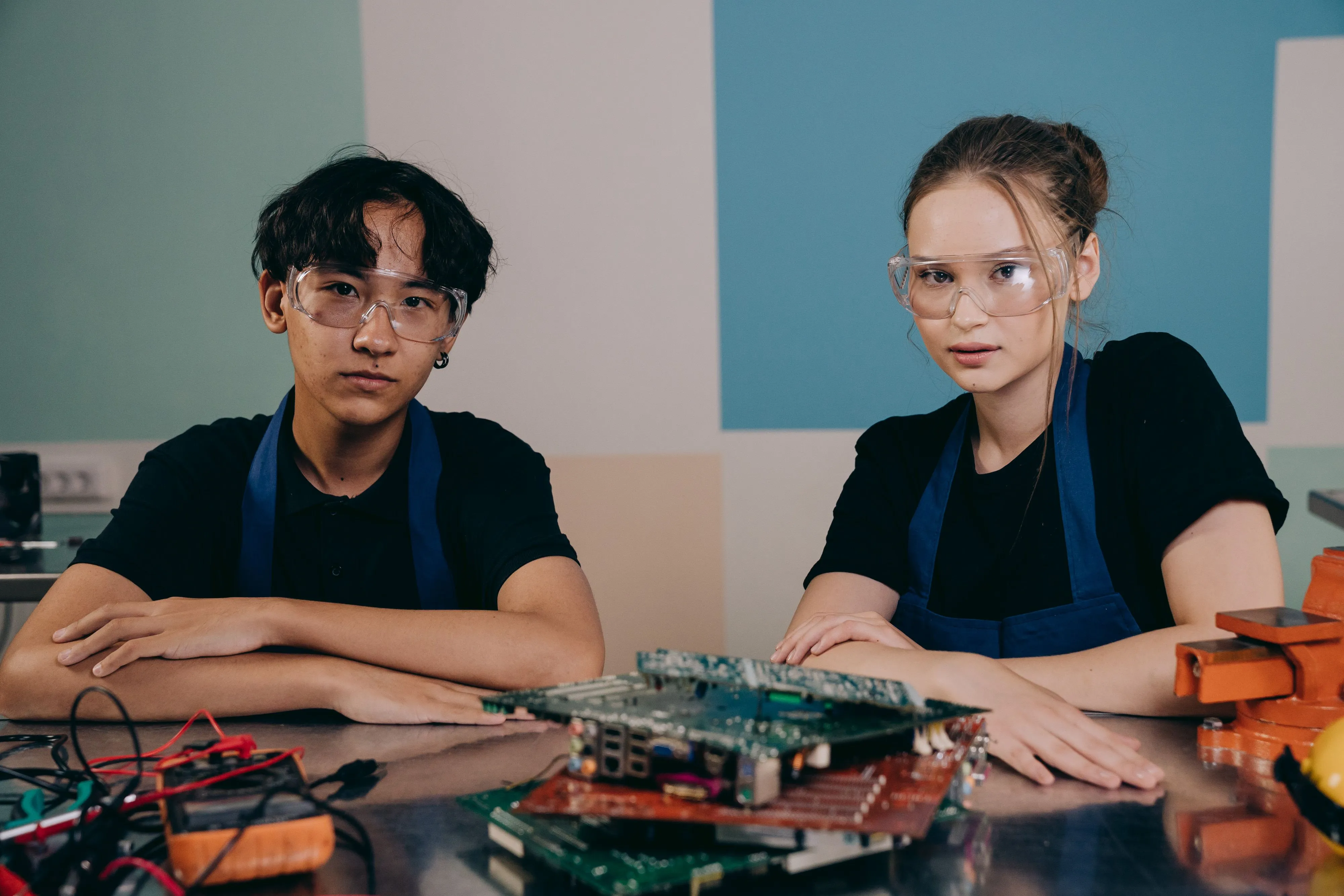
Starting on STEM projects in middle school is one of the best ways to set yourself up to excel at science fairs in high school. Below are hands-on project ideas across energy, environmental science, robotics, and more, each with the materials you'll need and the real-world impact behind it.
If you're brand new to this, our guide to doing middle school research is a great companion read for understanding how a project comes together from start to finish.
Renewable Energy: Build a Solar Oven
Harness the sun to cook with your own solar oven, built from cardboard, aluminum foil, and a few household materials. Experiment with different designs to optimize how well it absorbs and retains heat, then put it to the test baking cookies or melting marshmallows for s'mores. Beyond being fun, the project demonstrates the principles of renewable energy and the value of everyday sustainability, showing a practical use of solar power that can inspire others toward eco-friendly alternatives. Its visual, hands-on nature also makes it easy to present well, and our ultimate guide to science fair presentation boards can help you show off your results.
You'll need: cardboard, aluminum foil, insulating materials (Styrofoam or newspaper), clear plastic wrap, black construction paper, a thermometer, glue, tape, scissors, and optional food items for testing.
Environmental Science: Investigate Water Pollution
Step into the role of an environmental scientist by studying how pollution affects aquatic ecosystems. Design an experiment simulating different pollution types, like oil spills or chemical runoff, and observe their impact on water quality and aquatic life, then use your findings to propose real-world prevention and mitigation strategies. Because water pollution affects communities worldwide, this is a genuinely relevant and impactful topic, exactly the kind of real-world project that does well at competition.
If you're thinking about where to take it, our guide to middle school STEM competitions maps out your options.
You'll need: large containers or aquariums, water samples (tap, pond, etc.), pollutants (vegetable oil, food coloring, detergent), water-quality test kits, aquatic plants or small organisms, basic lab equipment, and safety gear.
Microbial Fuel Cells: Turning Food Waste Into Energy
Explore the fascinating world of microbial fuel cells (MFCs), devices that harness the metabolic activity of microorganisms like bacteria and yeast to generate electricity from organic material. Here you'd focus on converting food waste into clean energy. Set up MFCs using banana peels and inner and outer sugarcane bagasse, run Benedict's and iodine tests to assess the reducing sugars in each substrate, then monitor each cell's peak and average power.
It's a more advanced project, so it pays to learn from people who've done well before you. Our guide on how to get advice from a science fair winner covers how to make the most of that kind of mentorship.
You'll need: food waste (banana peels, sugarcane bagasse), soil, electrodes, and containers for the MFC setups.
Robotics: Design a DIY Robot Arm
Dive into robotics by engineering a functional robot arm from everyday materials like cardboard, popsicle sticks, and servos. Build one capable of simple tasks such as picking up objects or stacking blocks, exploring mechanical advantage, kinematics, and programming as you refine it. It's a hands-on introduction to the intersection of engineering, mechanics, and computer science, and a great way to spark deeper interest in STEM.
You'll need: cardboard or lightweight wood, popsicle sticks or dowels, servo motors, joints (paper fasteners), screws and bolts, an optional Arduino microcontroller and IDE, and basic tools.
Health: Clearer Speech After Hearing Loss
This project looks for better ways to help people speak more clearly after losing some hearing, testing two approaches together: bone conduction headphones, which send sound vibrations directly to the inner ear, and exercises that strengthen the muscles used for speaking. You'd assess volunteers' baseline speech, run a training program combining both methods, track their progress, and gather feedback from them and the people around them to see whether communication improved. It's a project with real human impact for people who struggle to communicate because of hearing loss, and its strong narrative makes for a compelling presentation if you build the board well.
You'll need: bone conduction headphones, a set of voice exercises, and volunteers with varying levels of hearing loss.
Physics: A Balloon-Powered Vehicle
Step into innovative propulsion with a balloon-powered car, but with a twist: instead of chasing distance or speed alone, aim for the perfect balance of both. Experiment with different balloon sizes, shapes, and air pressures, build and test prototypes, then analyze your data and optimize the design. It's a hands-on dive into aerodynamics and the science of motion, and a friendly distance-versus-speed competition makes it even more engaging.
It's also a great fit for younger students. Our best science fair projects for 6th grade middle schoolers rounds up more ideas in the same accessible, build-and-test spirit.
You'll need: balloons in various sizes and shapes, cardboard for the body, straws for low-friction axles, wheels (store-bought or homemade), and tape.
Sustainability: Should School Computers Sleep?
Ever wonder if school computers could take a well-deserved nap? This project explores the energy and cost savings of putting school computers to sleep when they're idle. Measure energy usage with and without sleep mode, compare the data, translate the energy savings into dollar savings, and share recommendations for optimal settings. It empowers schools to be both greener and more financially savvy, while raising awareness of why energy efficiency matters.
You'll need: access to school computers, a way to measure their energy usage, and their sleep-mode settings.
Environmental Engineering: Carbon-Coated Seashells for Water Filtration
Explore sustainable filtration by using carbon-coated seashells to purify lead-contaminated water, testing their effectiveness against conventional filters. Coat the shells with activated carbon, prepare lead-contaminated water samples, run both filter types, and measure how much lead each removes before evaluating whether shells could work in larger water systems. It reimagines a natural material as an eco-friendly solution to a serious water-quality problem, and a clear side-by-side comparison like this makes for a strong poster. Our guide to building a standout science fair poster shows how to present those results at their best.
You'll need: seashells, activated carbon for coating, lead-contaminated water samples, and materials to build both shell and traditional filtration setups.
Middle School STEM Competitions to Enter
Once you've built a project you're proud of, the next step is finding the right stage for it. Middle schoolers have two standout national competitions to aim for, both designed specifically for your age group.
The Thermo Fisher Junior Innovators Challenge rewards rigorous scientific research and starts at your local affiliated science fair, making it a natural fit for the more research-heavy projects above, like the microbial fuel cells or the seashell water filter.
The 3M Young Scientist Challenge, on the other hand, is all about inventing a solution to an everyday problem and pitching it in a short video, so it suits the hands-on, build-and-test projects like the robot arm or balloon-powered car. Both are among the best ways to turn a middle school project into real recognition and set yourself up for high school competitions down the line.
Start Your Science Fair Journey
Not sure how to turn one of these ideas into a real, competition-ready project? That's where ScienceFair comes in. Our mentors have competed in and won the top STEM competitions, and they'll help you shape your idea, strengthen your research, and prepare for the judges' questions.
Ready to get started? Schedule a call with our academic advisor.
