
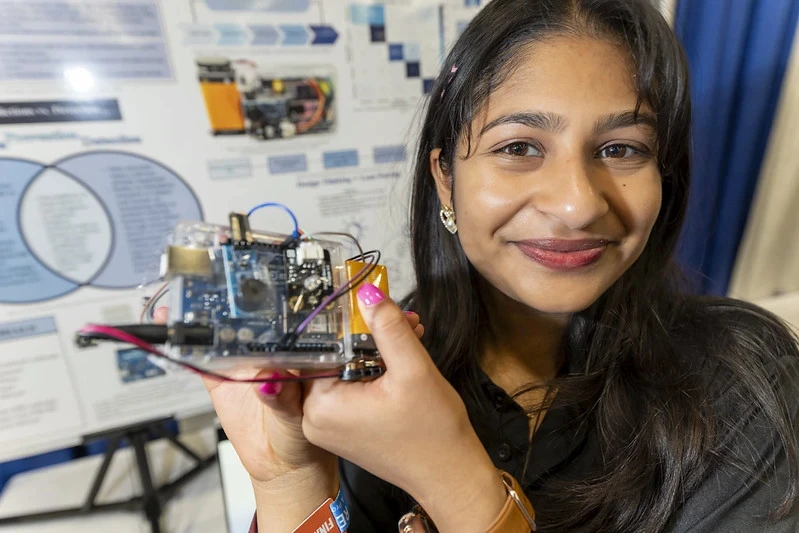
A good summer ends with a specific question and a tested way to attack it, not just a clever topic.
As an ISEF winner, if I were starting an ISEF-level project this summer, I wouldn’t focus on finishing it. I would answer four less exciting questions:
What problem do I care about?
Which fair can I enter?
Do the rules allow my plan?
Does the basic method work?
Students lose months by skipping these. By September, you want a project you can begin, not a folder called “science fair ideas.”
Find Your ISEF-Affiliated Fair First
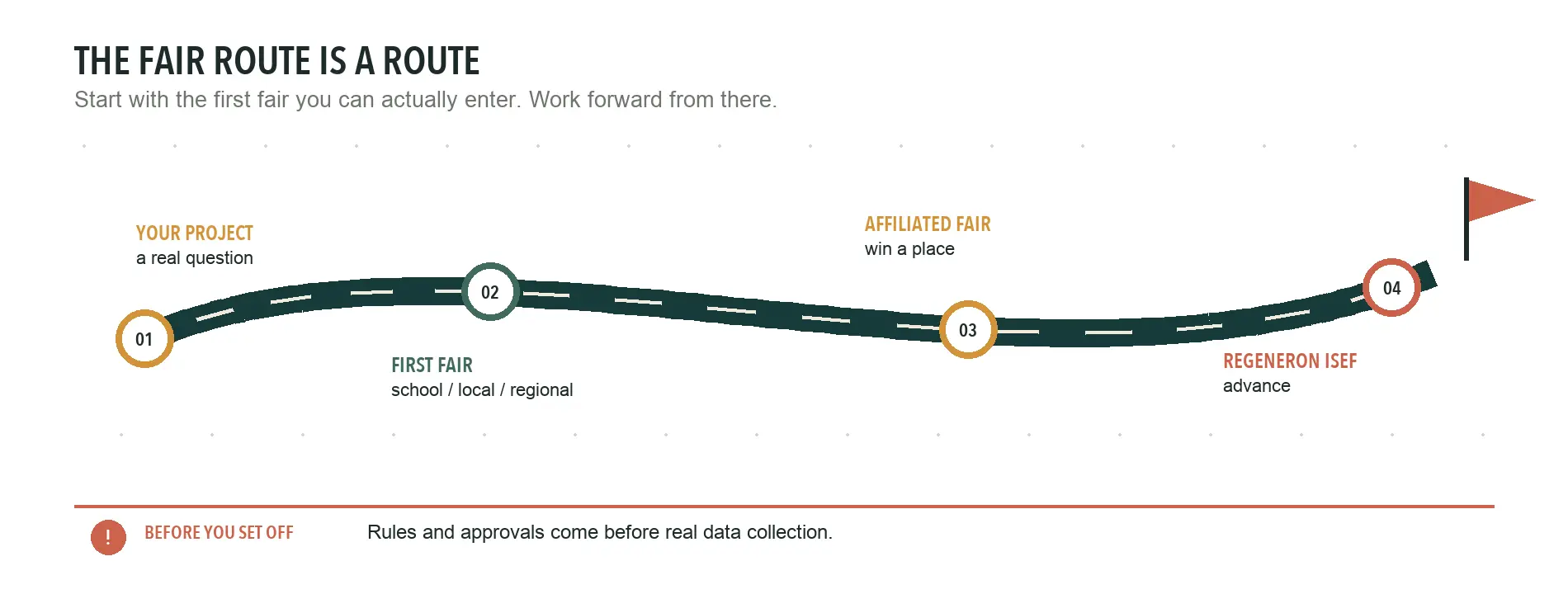
You cannot enter ISEF directly. You qualify by winning a place through an ISEF-affiliated fair. Your route might be school to regional to state or national fair, then ISEF. It might be much shorter. Do not assume.
Spend your first afternoon using the Society for Science Find a Fair directory. Write down the first fair, its date, registration deadline, forms to fill in, categories, and Scientific Review Committee contact. Read its rules. That first fair controls your timetable, not ISEF in May.
How to Find a Science Fair Project Idea That Wins
The internet is full of lists such as “50 science fair projects that will impress judges.” Ignore them. A better starting point is to keep a running list called Problems. Read your local news. Look at council reports, industry publications, community Facebook pages, and the things adults complain about at dinner. Write down anything that seems expensive, unfair, wasteful, dangerous, or oddly unsolved. These are the ideas worth pursuing.
That is roughly how my Wool that Breathes project started. Local reporting kept putting two problems in front of me. Climate change felt remote from everyday action, while New Zealand farmers were struggling to make money from wool.
I put them together: could a wool textile passively capture carbon dioxide and become more valuable? That became a project about growing porous crystalline microstructures on wool.
My first-place ISEF Grand Award project, Better Backseat Driver, began with the same habit. Over Easter, the news led with the holiday road toll. I started asking why so much road-safety work focused on protecting people during a crash when driver behaviour causes most crashes in the first place.
Then I found the unfair bit. Effective safety features existed in newer cars, but people in older cars were least likely to have them. Could the phone already in almost every car provide some of those “eyes and ears”?
The project was never just “build an app.” It was about making safety technology available to people who could not buy a new car.
Try this yourself: list 20 problems, circle three you would still care about in six months, then speak to someone who faces each problem and someone who understands it. One useful conversation can save a month of solving the wrong thing.
Test Your Idea With a Cheap Pilot Experiment
Once you choose a direction, test the part most likely to kill it.
Do not build the whole app. Prove the phone can read the signal. Do not buy a semester’s chemicals. Run one reaction. Do not recruit 100 people. Check that the survey produces usable answers after getting any required approval. For the wool project, I spent about a year fighting fabric. Chemistry, I quickly discovered, is far harder than coding.
A failed summer test is cheap and helpful. The same failure in January, after everything depends on it, is a disaster. Keep the result, photograph the setup, and note what changed. That notebook shows the work is yours.
Get Your ISEF Forms and Approvals Done First
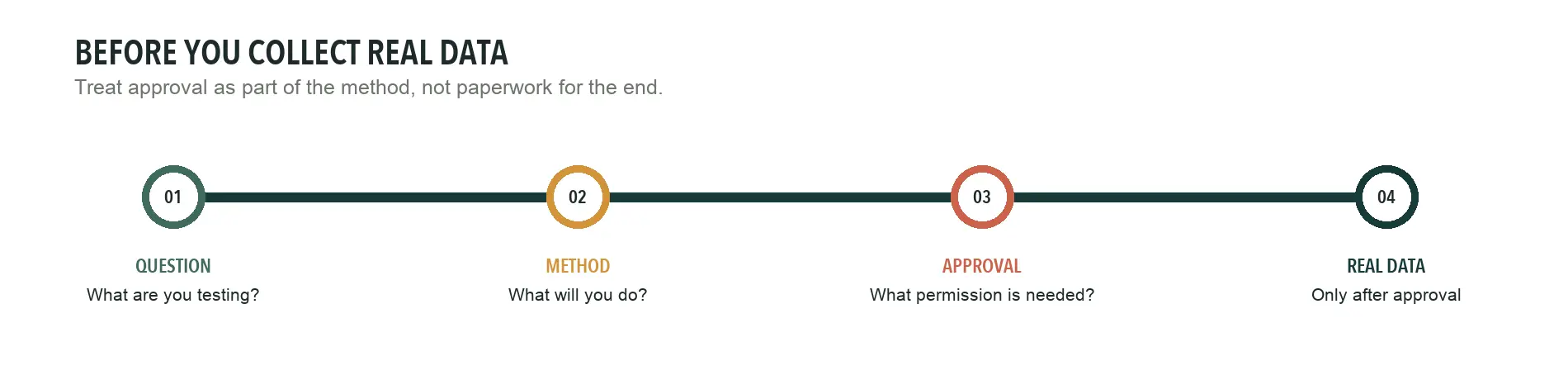
ISEF forms are not something you fix at the end.
The official rules and forms require the research plan and core signatures before experimentation. Work involving people, vertebrate animals, potentially hazardous biological agents, or tissue may need IRB or SRC approval before recruitment or data collection.
If you are unsure, email your fair director or SRC with a one-paragraph description. Get a written answer.
A Week-by-Week Summer Research Timeline
A vague goal such as “work on science fair” is easy to postpone. I would use an eight-week summer like this:
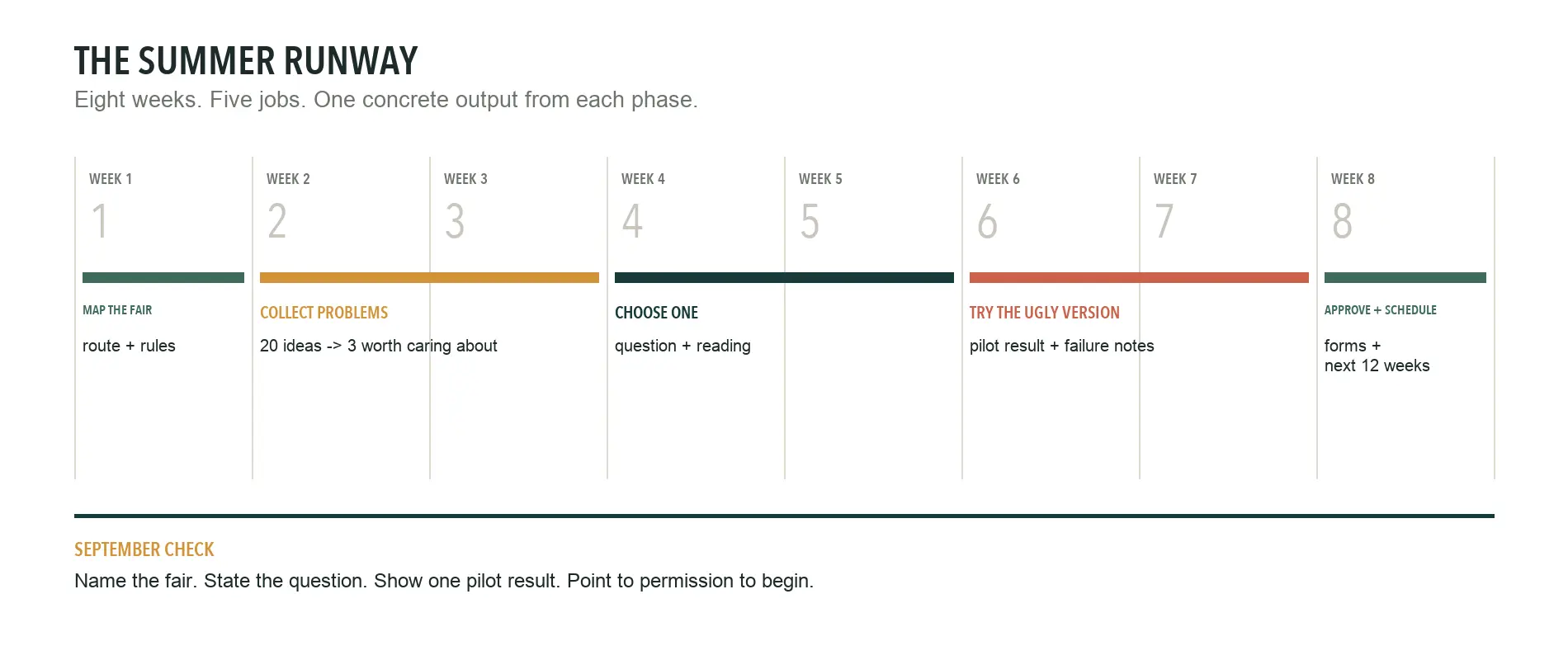
The point is not to stay busy for eight weeks. It is to finish each block with something concrete.
Your ISEF Project Checklist for September
What you should have by September:
Your fair map: the route, dates, category, rules, and SRC contact.
One precise question or engineering goal: not a subject area.
A short evidence note: what is already known, what is missing, and what you will add.
One pilot result: including what failed and what you will change in your research.
A workable method: materials, controls or design criteria, budget, and analysis.
Permission to start: the correct forms and approvals completed first.
A twelve-week calendar: with the next experiment already scheduled.
Building a timeline to ISEF will help you to stay organized and have a clear plan to help you win.
Your ISEF project does not need to begin with a futuristic technology. Mine began with local news about wool and farmers, then became a materials science project.
Start with the world you can see. Find something that bothers you, learn how the competition works, and test one honest idea.
ScienceFair: Your Guide to the ISEF Stage
Ready to make ISEF your reality? Our coaches, including myself, are past science fair winners, including ISEF Grand Awardees, Regeneron STS Finalists, Presidential Scholars, and Davidson Fellow Laureates.
You work with us and Ivy League research mentors who help you shape a publishable research question. Book a call with an academic advisor to build your personalized path to the stage.
