
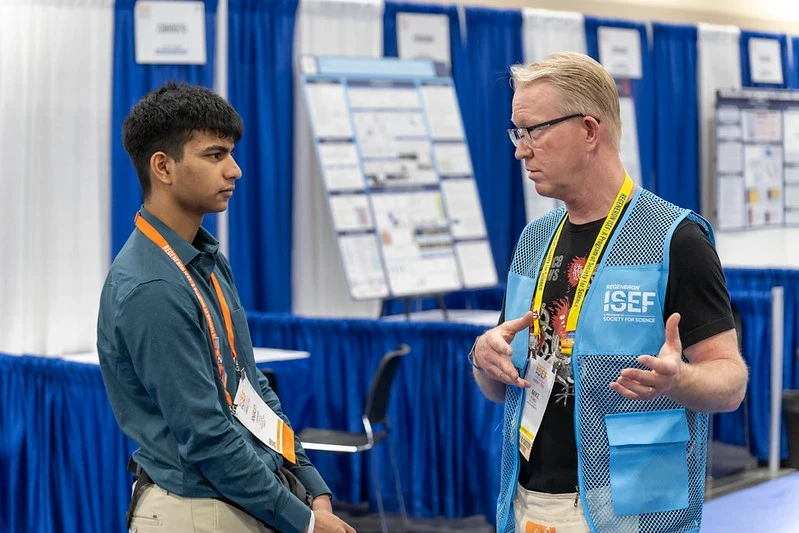
Science research is one of the best ways to stand out in high school. Colleges and competitive programs increasingly want to see real experience in these fields, and the science fair is where you prove it. Along the way you build genuine presentation skills, thanks to the prestigious fairs you compete in, and you come away with connections, awards, and sometimes publications that add real weight to your resume. This guide walks you through the whole journey, from getting started to winning at the highest level.
Getting Started in Research
You can enter the science fair with an individual project or as part of a team, and many students also work with a mentor. A good first move is to browse ISEF's competition categories: they double as a map of the field, letting you see which areas genuinely fascinate you and explore the existing research within them.
Finding the right idea is often the hardest part, so it helps to learn from people who've done it well. Our guide to the best science fair project ideas for high schoolers is full of concrete starting points you can adapt, and how to get advice from a science fair winner covers how to make the most of mentorship as you shape your project.
Qualifying Fairs: Regionals, State, and Nationals
To reach the International Science and Engineering Fair (ISEF), you first have to place well at qualifying fairs. The ISEF Finalist title goes only to the best of the best, typically the Best of Fair winners at these earlier rounds, and the number of spots at each fair depends on the level of competition there.
If your goal is to become an ISEF Finalist, learning to sell your project is essential. You need three things: knowledge, passion, and a WOW factor.
Knowledge. Especially on projects that involved a mentor, it's easy to lose sight of the mechanics behind your own work. You need to understand everything, from why your research matters to how it could actually be applied. Don't stop at what you've done; be ready to explain what still needs to be done for the work to reach its full goal.
Passion. Judges are looking for genuine enthusiasm for science research. The science fair is a lot like Shark Tank: you're pitching your project for placement instead of funding, and the more passion you show, the more invested the judges become in your presentation. Everyone has one part of their project they truly love, so go deep there and let that excitement come through.
The WOW factor. What sets your project apart from every other one in the category? Did you do something novel? Did you solve a significant problem? Think back to what pulled you into the research in the first place, because that's usually where the WOW factor lives.
The Holy Grail: ISEF
ISEF is, hands down, the most prestigious science fair in the world. Students who simply participate often go on to some of the top colleges, and the connections they make there, alongside some of the smartest students on the planet, last a lifetime. Attending at all is a genuine achievement.
Winning an award at ISEF is a testament to important research and serious hard work. The skills are the same ones you honed at the regional level, but the competition is far more intense, so the preparation and polish need to rise to meet it. Our step-by-step guide to qualifying for ISEF maps out the full path from your first regional fair to the international stage.
Other Opportunities
Getting involved in the science fair opens the door to a whole world of STEM competitions. The same research can often be presented at events like the Junior Science and Humanities Symposium (JSHS), a great chance to win scholarships while sharpening your presentation skills. One strong project can travel a long way across multiple competitions, so it's worth thinking about where else your work could go.
Before your next fair, it's also worth pulling together the right support system. Our top 5 resources for science fair preparation rounds up the tools that make the biggest difference at each stage.
Get Started on Your Science Fair Journey
Everything above comes down to one thing: a strong project, presented with knowledge and passion, in front of judges you've prepared for. That's exactly what ScienceFair helps you build. Our mentors have competed in and won the top STEM competitions, and they'll work with you from your first idea all the way to the judges' Q&A.
Ready to make your run at the science fair? Schedule a call with our academic advisor.
