
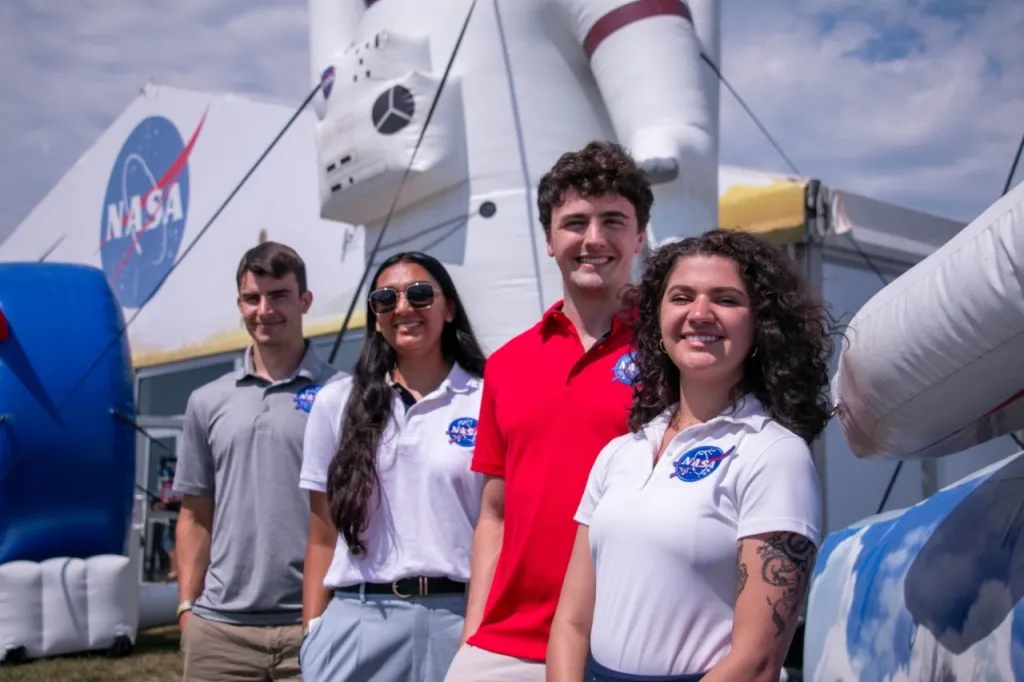
Can High School Students Intern at NASA?
Yes, but only a small number of high school students successfully secure internships with NASA each year, and the bar is significantly higher than most expect.
Programs like SEES (Science and Engineering Experience for Students) are among the most accessible pathways. However, these are not introductory experiences. Successful applicants already demonstrate strong academic performance, technical abil
ity, and a clear track record of initiative in STEM.
What Are the Requirements for a NASA High School Internship?
To be eligible for most NASA internships, students typically need:
U.S. citizenship (required for most programs)
Minimum age of 16 years old
Strong academic performance (especially in STEM subjects)
Demonstrated interest in science, engineering, or space-related fields
What Does NASA Actually Look for in High School Applicants?
Strong grades matter, but they are only the baseline. What differentiates successful applicants is how they apply those skills beyond the classroom.
A competitive high school applicant typically has:
Academic Strength
Advanced coursework (AP Calculus, Physics, Computer Science)
High GPA in rigorous classes
Technical Skills
Programming (Python, Java, MATLAB)
Data analysis (NumPy, Pandas, Excel)
Engineering tools (CAD, Arduino, robotics)
Demonstrated Initiative
Independent STEM projects
Science fair participation
Research or experimentation
Clear Interest in Space
Astronomy clubs, competitions, or content creation
Familiarity with NASA missions and goals
How Competitive Are NASA High School Internships?
NASA internships are extremely selective, even at the high school level.
Many applicants already have experience that goes beyond typical school expectations, including research exposure, technical portfolios, or participation in national STEM competitions.
This creates a common mistake: students assume strong grades will be enough. But selection decisions are driven by evidence of initiative and depth.
If your profile looks similar to every other high-performing student on paper, it will be difficult to stand out.
How to Start Preparing Early (What Actually Moves the Needle)
The most effective preparation strategy is to build a track record of doing, not just learning.
Students who stand out tend to start early by applying their skills in practical ways. That might mean writing code for a personal project, building hardware with Arduino, analysing datasets, or designing something using CAD tools. Over time, these projects become a portfolio that proves both technical ability and persistence.
Just as importantly, they accumulate experiences that show progression. A research internship, a summer STEM program, or even a self-directed research project signals that the student is already operating beyond the classroom.
When Should You Start Preparing?
By the time you submit a NASA application, your profile should already reflect sustained interest and development. That typically requires at least six to twelve months of intentional preparation.
Students who decide to apply a few weeks before the deadline are usually competing against others who have been building toward this goal for years.
How to Make Your Application to NASA Stand Out
The strongest applications are specific, evidence-driven, and clearly aligned with NASA’s mission.
A compelling personal statement does more than express interest. It connects past work to future goals and shows how the student has already taken steps in that direction. Vague enthusiasm is easy to write and easy to ignore; concrete examples are what make an application memorable.
Similarly, a strong resume focuses on impact. Instead of listing activities, it demonstrates what was built, improved, or achieved. Even at the high school level, measurable outcomes carry significant weight.
What If You Don’t Get Selected?
Strong applicants treat rejection as a signal, not a setback. They refine their profile, deepen their experience, and reapply with stronger evidence of capability.
Others build momentum through related opportunities, including roles at organisations like SpaceX or Blue Origin, or through university-affiliated research programs.
What Actually Gets You to NASA
Landing a NASA internship as a high school student is about demonstrating readiness.
The students who succeed are already acting like young engineers, researchers, or problem-solvers. They build, test, explore, and iterate long before they apply.
That’s the difference most applicants miss, and the reason so many strong students fall short.
